Blog
Doodling in Class: What That Pencil in the Margin Is Telling You
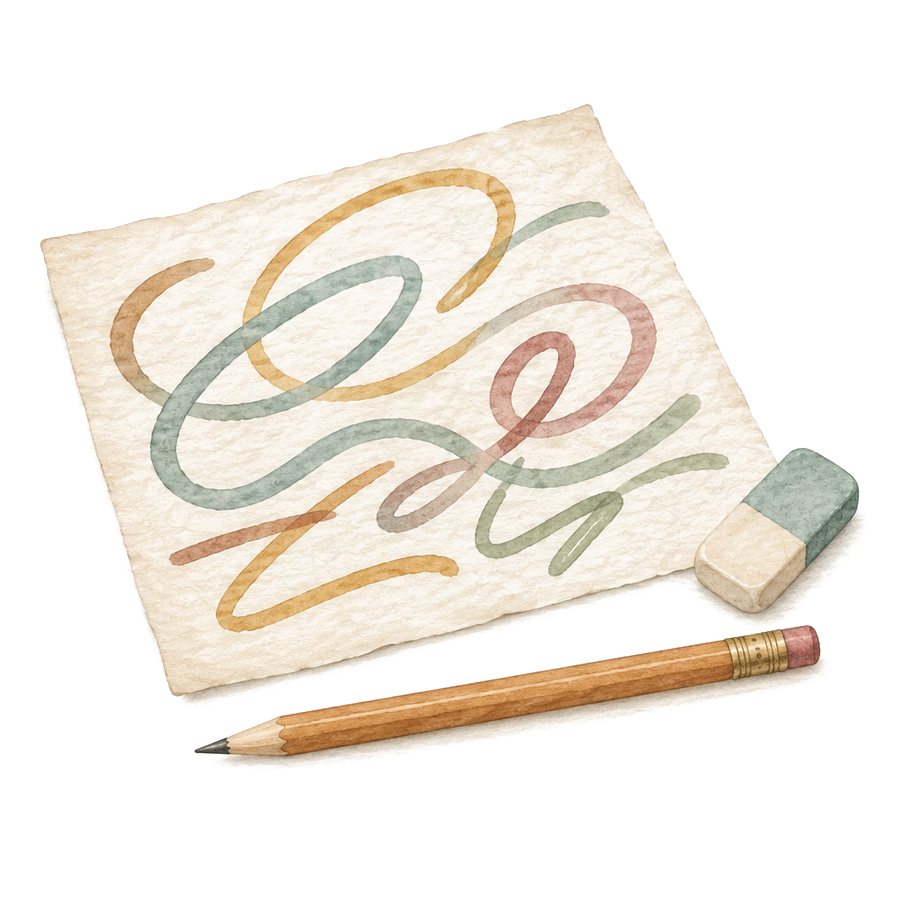
You're at the front of the room, halfway through explaining something that matters. You planned this lesson carefully, probably late last night, somewhere between grading and answering parent emails. Then your eyes land on the third row, where a student is quietly filling the margin of the worksheet with little spirals and zigzags.
The questions show up before you've even finished your sentence. Is she listening at all? Is he? Should you say something, and if you don't, will the whole row have pencils going by the end of the period?
You're already juggling a dozen things at once, so this tiny judgment call on top of everything else can feel like a lot. I'd like to take some of that weight off your shoulders: the pencil itself won't give you the answer. You can take your time and look a little more closely.

Doodling in class doesn't always mean the same thing
Two students can look exactly alike from where you're standing and be doing completely different things. For one, doodling is just something the hand does while the ears keep listening. For another, it's actually part of the learning: the sketches, arrows and little symbols are thoughts made visible, and a student who draws like that is often following along very closely.
To be honest, though, sometimes drawing really does pull a student away, whether from what you're saying or from the work sitting on the desk. And you can't tell which of these is happening just by glancing at the page.
You may have come across the word fidgeting for small, restless movements. It simply describes the movement and doesn't automatically mean someone has stopped paying attention. Stimming can play a part too. That's self-regulating behavior, such as rhythmic movement, and while it's common in autistic people, plenty of other people stim as well.
Does doodling help students focus?
You might have heard that doodling helps people listen. Unfortunately, it isn't quite that simple. Researchers took a closer look at college students, all adults, listening to a lecture, and doodling didn't give them any edge in attention or memory, whether the doodling was structured or open-ended. The students who took notes did better on the task about the lecture.
It's worth knowing what “doodling” meant in that study, though: participants shaded in shapes while they listened. That isn't the same as a student sketching whatever comes to mind in your class, and adults aren't school kids, so the findings can't settle every question you have about your own classroom. What they do show is that doodling shouldn't be treated as a reliable focus aid across the board. Nor, for that matter, should it be read as a sure sign that a student has checked out.
Watch the learning goal, not the hand
One small shift helps me a lot. Instead of asking “Is she doodling?” I ask what the task needs from the student right now, and whether that's happening. Can they tell you the main point in their own words? Are they finding the key information in the material? Are they getting the assignment done in the time you agreed on? Or has the drawing itself taken over?
Keep in mind that a calm face turned toward you says no more than a moving pencil does. A student can sit perfectly still, eyes on the board, and be miles away. That's why a single moment isn't much to go on. Watching over a few days gives you a far clearer picture, and it takes away the pressure to decide on the spot.
Four steps to a fair view of doodling
-
1. Agree on what kind of drawing fits
When the goal is listening, small patterns in the margin can be fine. When students need to get important notes down, offer a note box or a set of symbols instead. Their hands stay busy, and the important stuff still ends up on paper.
-
2. Keep doodles and subject sketches apart
You can allow doodling just for its own sake and, separately, make sketches about the content an official part of the assignment. Once you've named both clearly, everyone knows what you're asking of them at any given moment.
-
3. Build in a switch point
Partner work, experiments and copying something down all need empty hands. Give a short heads-up before that switch, the same way every time, and nobody gets caught off guard when it's time to put the pencil down.
-
4. Ask what actually helped
After class, ask: “What helped you while you were listening?” If the honest answer is that doodling didn't help, take that seriously too, and keep looking together for something that works.
When drawing helps a student regulate
Some students rely on repeated movements to manage tension, and that can be stimming. Stopping it can make their stress worse. For these students, the pencil moving in the margin is sometimes exactly what keeps them in the room and in the lesson.
That doesn't mean every movement has to be okay at every moment. You can keep safety, the learning goal and the rest of the class in mind all at once. If a student's movement is really distracting others, work out a quieter option together. Often a narrow margin on the page, a silent object to hold, or a different seat is all it takes.
What to say when doodling does get in the way
Letting students doodle doesn't need a public explanation. You can offer it to the whole class and still be clear about where the limits are, so nobody has to justify themselves and nobody gets singled out in front of their classmates.
If the drawing becomes a problem at a particular moment, name the situation in front of you, something like: “Put your pencil down for a moment so you can do the experiment safely.” Skip lines like “You never pay attention.” They pass judgment on the student without telling them what to do right now. Once the task is done, the two of you can calmly look for another solution.

Download: “Doodle or Note?”
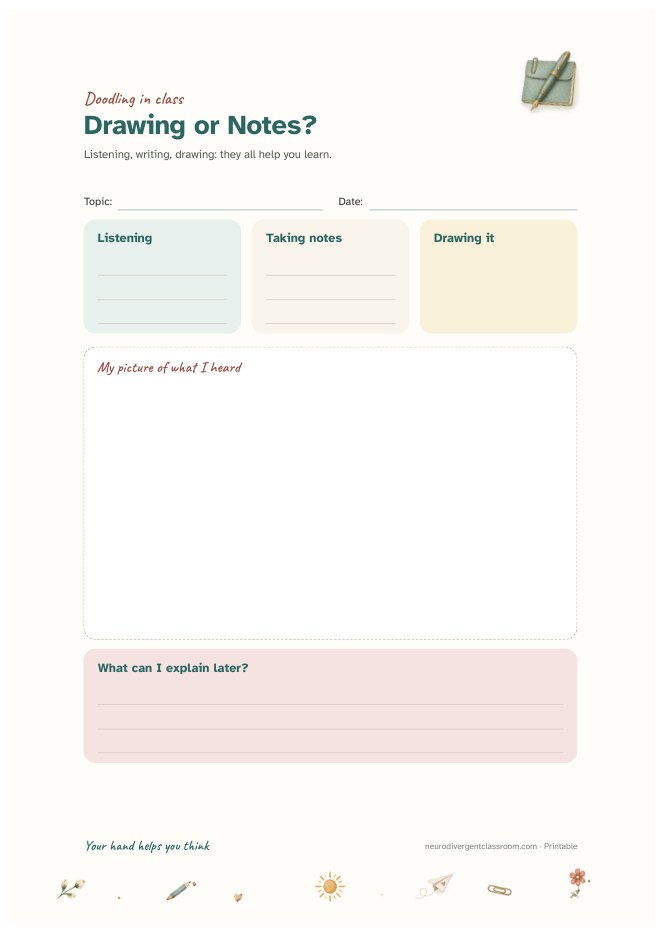
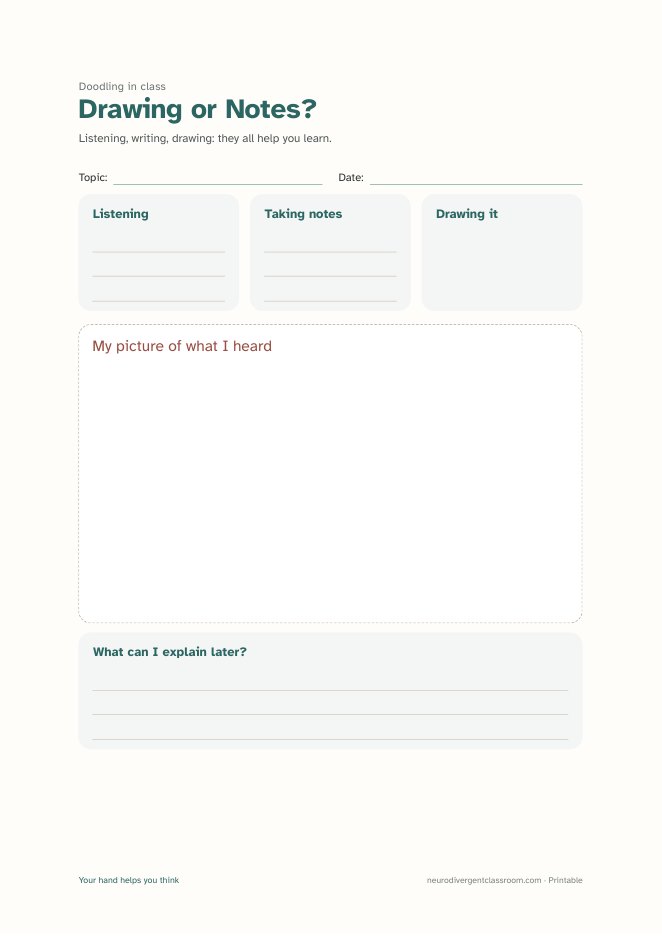
This little card lets your students check for themselves what their pencil is doing right now. It has three boxes: “Listening,” “Taking notes,” and “Drawing it.” At the bottom is the question “What can I explain later?”, which makes for an easy, no-blame conversation. The card doesn't judge anyone or ask anything personal, so you can hand it out to the whole class.
Every printable comes in a colorful and a simple version. Choose the one you like to work with. Click the image to open the printable.
And one just for you
A page to take a breath and write things down, no lesson planning involved.
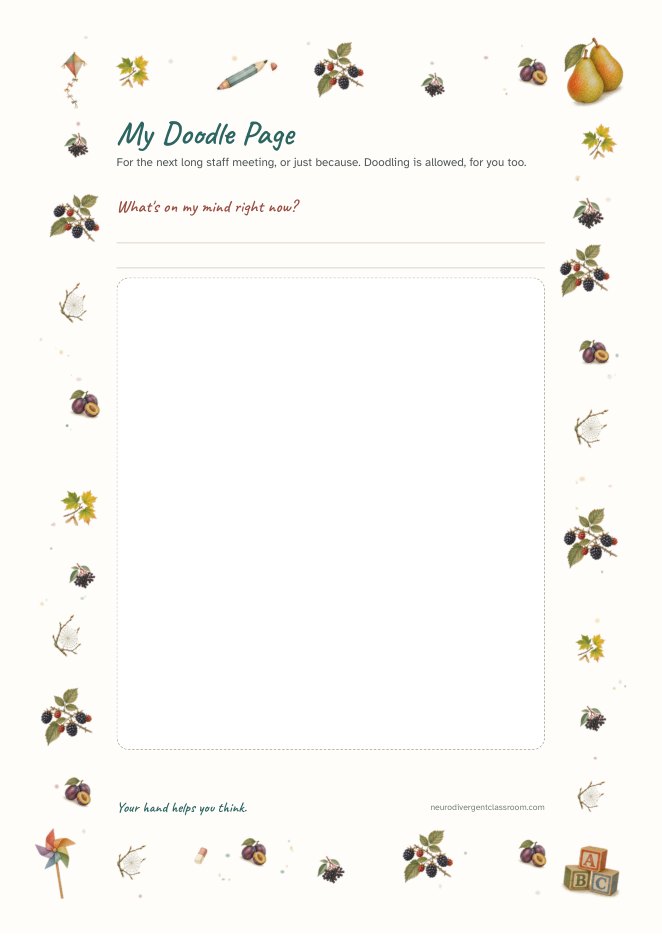
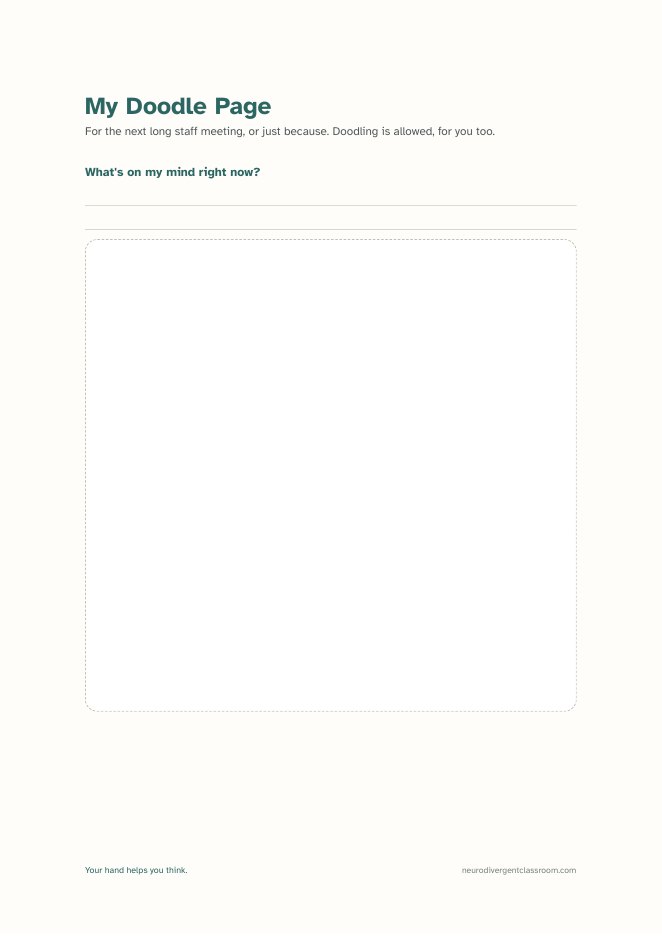
You will find these and all other printables collected in the Teacher Portal (members only).
You don't need to decode every line in the margin. If you stay curious and keep your eye on the learning rather than the hand, you're already well on your way.
Sources
- National Autistic Society: Stimming, a guide for all audiences, accessed October 14, 2026.
- Spencer-Mueller and Fenske: Note-taking for the win, 2024, accessed October 14, 2026.